About KPV
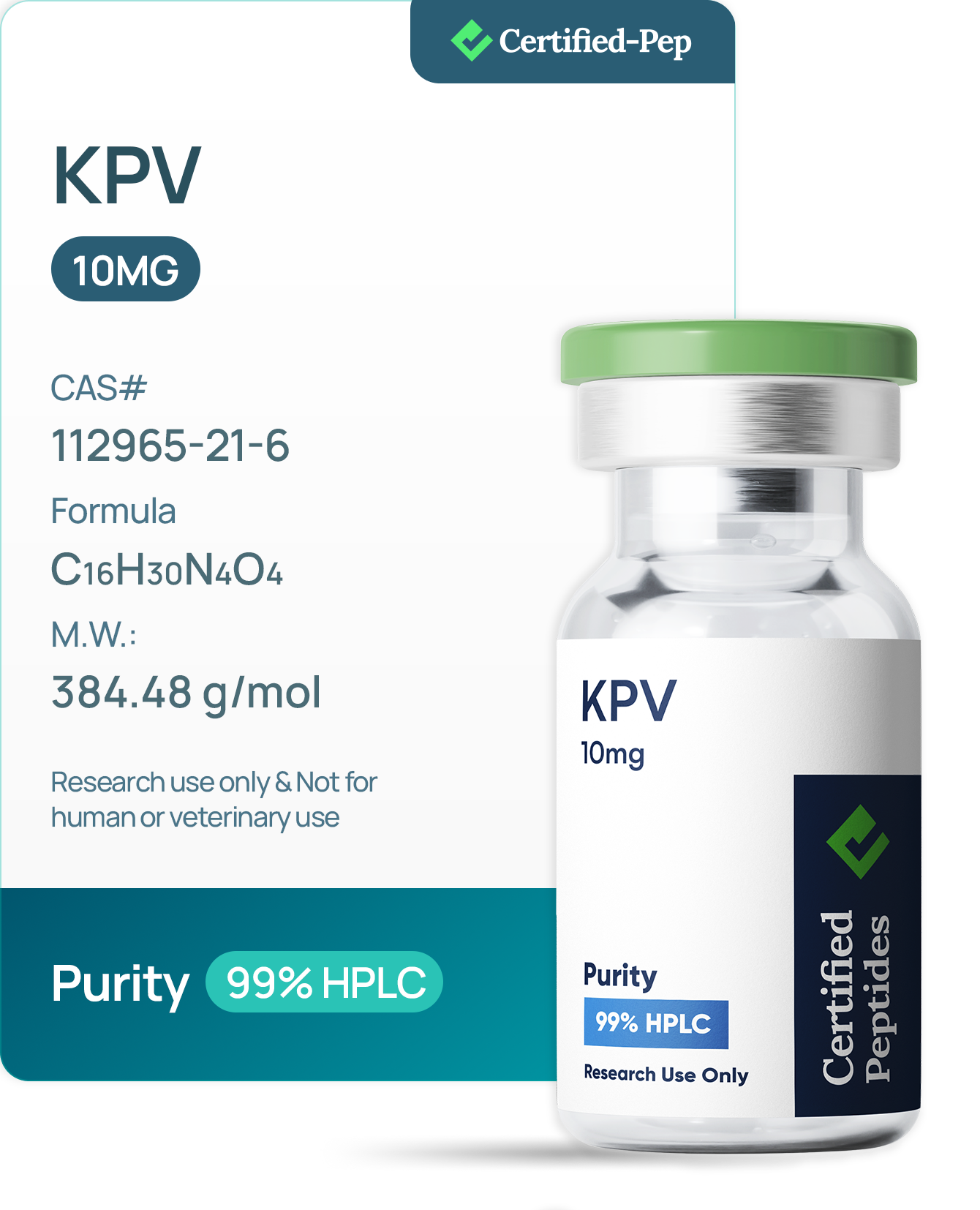
KPV is the C-terminal tripeptide of alpha-MSH and is studied for its anti-inflammatory effects in IBD models, dermatology, and wound healing. Often used adjunctively with BPC-157 in gut-focused research.
Gut Health
Tripeptide Anti-inflammatory
A C-terminal tripeptide of alpha-MSH studied for anti-inflammatory effects in IBD models.
KPV is the C-terminal tripeptide of alpha-MSH and is studied for its anti-inflammatory effects in IBD models, dermatology, and wound healing. Often used adjunctively with BPC-157 in gut-focused research.
Where to buy
Some links on this page are affiliate links. We may earn a commission when you purchase through them, at no extra cost to you.
 Best $/mg




 Atomik LabzTested
CAPSULES – KPV 500mcg x 90 Capsules
$129.00
$258.00/mg · 500mcg

 Solution PeptidesTested
CAPSULES – KPV 500mcg x 90 Capsules
$129.00
$258.00/mg · 500mcg


Evidence level
Preclinical only
The C-terminal tripeptide of alpha-MSH (Lys-Pro-Val) with anti-inflammatory activity in preclinical IBD, dermatitis, and wound-healing models. Human data is minimal.
Mechanism
Modulates melanocortin signaling and NF-kB pathways.
Researched benefits
Gut anti-inflammation (preclinical)
In DSS- and TNBS-induced colitis models in mice, oral and rectal KPV reduce histological inflammation, neutrophil infiltration, and pro-inflammatory cytokine expression at low microgram doses.
NF-κB pathway suppression
KPV inhibits nuclear translocation of NF-κB in stimulated macrophages and intestinal epithelial cells, reducing TNF-α, IL-6, and IL-1β output in cell culture.
Skin and wound-healing applications
Topical KPV has been studied in atopic dermatitis and acne models; reduced erythema and accelerated re-epithelialization were reported in small preclinical experiments.
Oral bioavailability
Unusually for a peptide, KPV appears to be absorbed intact via the PepT1 transporter in intestinal epithelium, enabling oral dosing in colitis models.
Risks & cautions
Limited human safety data
Most data is rodent. A few small dermatology trials exist but long-term human use is uncharacterized.
Immunomodulation
Suppressing NF-κB chronically has theoretical implications for infection clearance and tumor surveillance. Not demonstrated in humans but worth considering.
Pigmentation considerations
Unlike full-length alpha-MSH, KPV does not bind melanocortin-1 receptor strongly and is not expected to cause hyperpigmentation. Mentioned because the parent molecule does.
Injection-site reactions
Standard subcutaneous risks; oral and topical use have different (mostly milder) tolerability profiles.
Dosing
200–500 mcg daily, subcutaneous or oral, often run in 4–8 week courses.
Vial sizes
5mg / 10mg
Half-life
Short
Route
subcutaneous, oral
Reconstitute with bacteriostatic water for injection. Oral forms exist but absorption depends on PepT1 expression, which can be downregulated in inflamed gut tissue. Often stacked with BPC-157 in gut-focused protocols.
Contraindications
In depth
KPV (Lys-Pro-Val) is the C-terminal tripeptide of alpha-melanocyte-stimulating hormone (α-MSH, residues 11–13). Interest in the fragment grew when researchers noticed that α-MSH's anti-inflammatory activity could be partially recapitulated by its C-terminal sequence — without the pigmentation effects mediated by its N-terminal melanocortin-receptor binding domain.
KPV's small size makes it unusually stable and orally absorbable, which has made it attractive for gut-targeted research.
Proposed and partially demonstrated mechanisms:
The PepT1 pathway is what enables oral and intracolonic dosing — uncommon in peptide pharmacology.
Most data is in mice and rats:
Limited:
Common combinations:
References


