Skip to content
Save at BioLongevity Labs with code EVERYDAY•Save at S1 Research with code everydaypeptide•Save at Alpha Peptides with code EVERYDAY•Save at Ion Peptide with code EVERYDAY•Save at Solution Peptides with code EVERYDAY15•Save at Atomik Labz with code EVERYDAY25•Save at Next Gen Peps with code EVERYDAY•
EVERYDAYPEPTIDES
  • Peptides
  • Vendors
  1. Home
  2. Peptides
  3. MOTS-c

Longevity

MOTS-c

Mitochondrial Derived Peptide

A mitochondrial-derived peptide studied for metabolic regulation and insulin sensitivity.

Early humanResearch use only

About MOTS-c

MOTS-c is a 16-amino-acid peptide encoded within the mitochondrial 12S rRNA. Research interest covers metabolic regulation, insulin sensitivity, and exercise mimetic effects. Most data is preclinical with a small body of early human work.

Category
Longevity
Typical dose
5-10 mg weekly
Vial sizes
10mg
Half-life
~30 minutes
Administration
subcutaneous
Goals
Longevity, Fat loss

Where to buy

Vendor offerings

Some links on this page are affiliate links. We may earn a commission when you purchase through them, at no extra cost to you.

  • MOTS-C – 40mg from Atomik LabzBest $/mg
    Atomik LabzTested

    MOTS-C – 40mg

    $99.00

    $2.48/mg · 40mg

    EVERYDAY25
    Shop on Atomik Labz
  • MOTS-C – 40mg from Solution Peptides
    Solution PeptidesTested

    MOTS-C – 40mg

    $99.00

    $2.48/mg · 40mg

    EVERYDAY15
    Shop on Solution Peptides
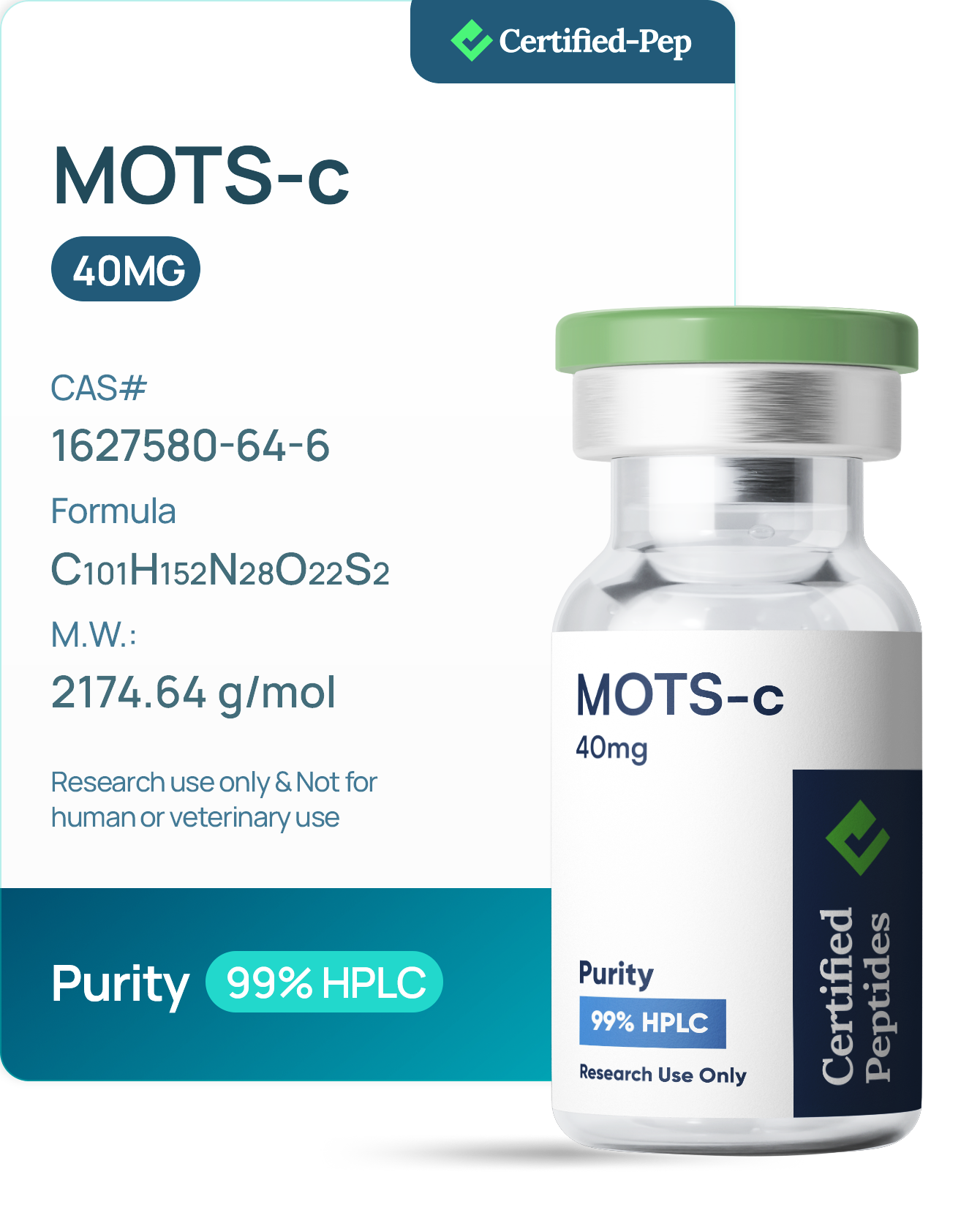
  • MOTS C 40MG from Certified Peptides
    Certified PeptidesTested

    MOTS C 40MG

    $130.00

    $3.25/mg · 40mg

    Shop on Certified Peptides
  • MOTS-C – 10mg from Atomik Labz
    Atomik LabzTested

    MOTS-C – 10mg

    $39.00

    $3.90/mg · 10mg

    EVERYDAY25
    Shop on Atomik Labz
  • MOTS-C – 10mg from Solution Peptides
    Solution PeptidesTested

    MOTS-C – 10mg

    $39.00

    $3.90/mg · 10mg

    EVERYDAY15
    Shop on Solution Peptides
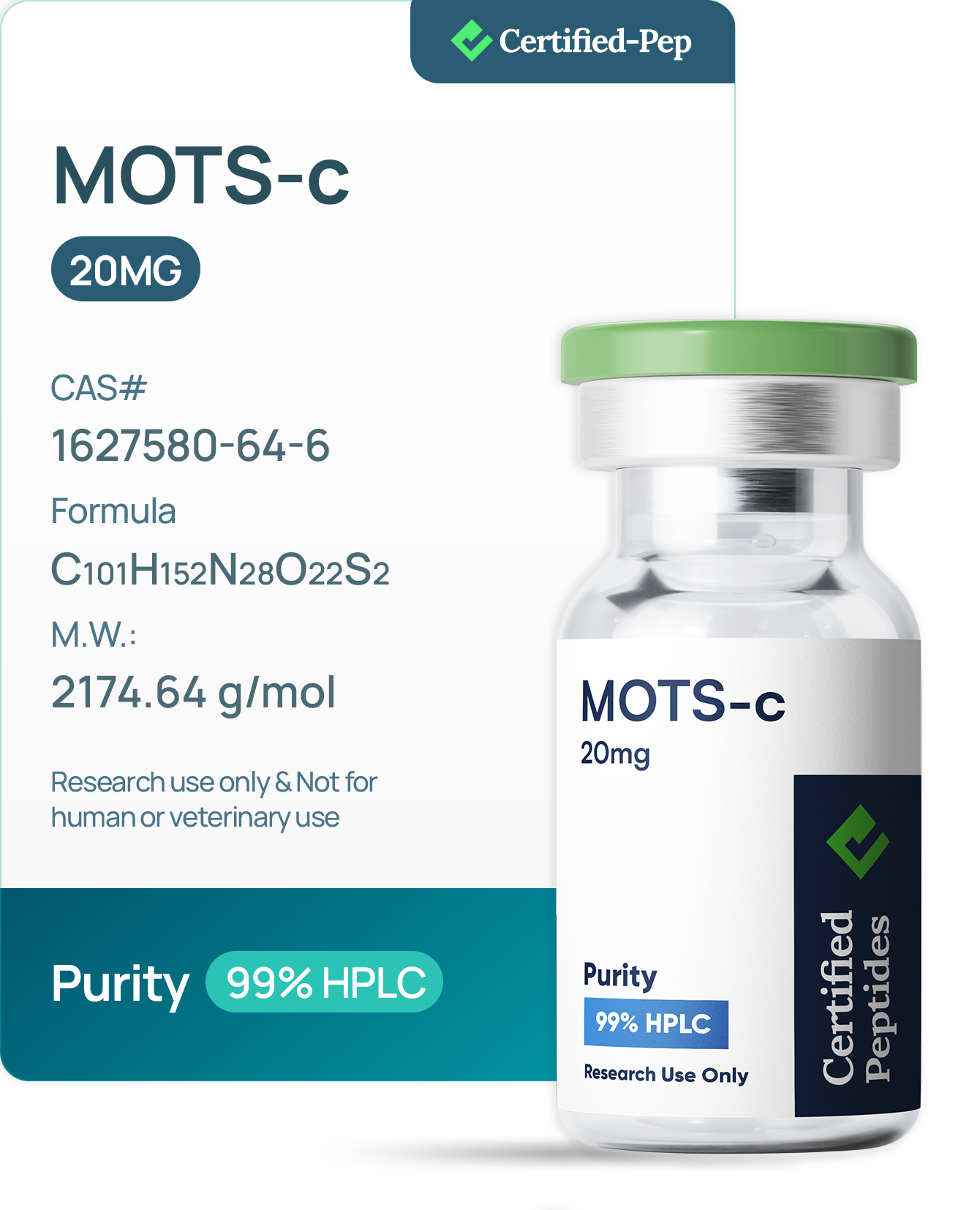
  • MOTS C 20MG from Certified Peptides
    Certified PeptidesTested

    MOTS C 20MG

    $80.00

    $4.00/mg · 20mg

    Shop on Certified Peptides
  • MOTS C 10MG from Certified Peptides
    Certified PeptidesTested

    MOTS C 10MG

    $52.00

    $5.20/mg · 10mg

    Shop on Certified Peptides
  • MOTS-c (10mg) from BioLongevity Labs
    BioLongevity LabsTested

    MOTS-c (10mg)

    $109.97

    $11.00/mg · 10mg

    EVERYDAY
    Shop on BioLongevity Labs
  • MOTS-C from Alpha Peptides
    Alpha PeptidesTested

    MOTS-C

    $39.99

    — ·

    EVERYDAY
    Shop on Alpha Peptides
  • MOTS-c from Ion Peptide
    Ion PeptideTested

    MOTS-c

    $42.00

    — ·

    EVERYDAY
    Shop on Ion Peptide
  • MOTS-C from Next Gen Peps
    Next Gen PepsTested

    MOTS-C

    $52.00

    — ·

    EVERYDAY
    Shop on Next Gen Peps
  • MOTS-c from RUO
    RUO

    MOTS-c

    $36.00

    — ·

    Shop on RUO
  • MOTS-C from S1 Research
    S1 ResearchTested

    MOTS-C

    $45.00

    — ·

    everydaypeptide
    Shop on S1 Research

Evidence level

Early human studies

A 16-amino-acid peptide encoded inside the mitochondrial 12S rRNA gene. Acts as an exercise-mimetic by activating AMPK; early human data is promising but limited.

Mechanism

Activates AMPK and modulates mitochondrial energy metabolism.

Researched benefits

  • Mitochondrial biogenesis

    Activates AMPK, which upregulates PGC-1α and the downstream mitochondrial biogenesis program. Mouse skeletal muscle and liver show measurable increases in mitochondrial density.

  • Insulin sensitization

    Improves glucose disposal in diet-induced obese and aged mice; a single small human study (n=22) showed improved oral glucose tolerance after 16 days.

  • Exercise-mimetic effects

    Increases endurance and lean mass retention in rodent models, even in sedentary animals. Mechanism overlaps with metformin via AMPK.

  • Bone density (preclinical)

    Mouse osteoporosis models show preserved trabecular bone after MOTS-c administration.

Risks & cautions

  • high

    Limited long-term human data

    Only a handful of small human studies exist. Most safety inferences are extrapolated from short rodent trials. Endogenous MOTS-c suggests low baseline toxicity, but exogenous supraphysiologic dosing is not characterized.

  • moderate

    Possible hypoglycemia

    AMPK activation can lower fasting glucose. Caution when stacked with metformin, GLP-1 agonists, or insulin.

  • moderate

    Unknown effects on cancer pathways

    AMPK is upstream of mTOR. Both tumor-suppressive and tumor-protective effects have been reported in different cancer models. Avoid with active malignancy until more data exists.

  • low

    Injection-site reactions

    Standard subcutaneous risks: erythema, transient bruising, lipohypertrophy with repeated use of the same site.

Dosing

5–10 mg subcutaneously, 2–3× per week, in 4–8 week cycles.

Conservative
5 mg × 2/week
Standard
10 mg × 2/week
Aggressive
10 mg × 3/week (not commonly used)

Vial sizes

10mg

Half-life

~30 minutes

Route

subcutaneous

Reconstitute with bacteriostatic water. Half-life is short (~30 min plasma) so weekly cumulative dose matters more than per-injection frequency.

Contraindications

  • Active malignancy (theoretical concern)
  • Concurrent insulin or GLP-1 agonist without medical supervision
  • Pregnancy or breastfeeding — no data

In depth

Background

MOTS-c (Mitochondrial Open Reading frame of the Twelve S rRNA-c) is a 16-amino-acid peptide encoded inside the mitochondrial 12S rRNA gene — one of a small family of mitochondrial-derived peptides discovered in the last fifteen years. It is a signaling molecule, not a structural protein: it shuttles from mitochondria to the nucleus under metabolic stress and modulates nuclear gene expression.

Endogenous plasma MOTS-c declines with age. Acute exercise transiently raises it. These observations are the basis for the "exercise-mimetic" framing.

Mechanism in depth

The dominant pathway is AMPK activation. Under metabolic stress (fasting, exercise, caloric restriction) MOTS-c translocates to the nucleus and:

  1. Activates AMPK directly and indirectly through methionine–folate cycle modulation.
  2. Upregulates PGC-1α, driving mitochondrial biogenesis.
  3. Increases glucose uptake in skeletal muscle via GLUT4 translocation.
  4. Modulates inflammatory signaling (reduces IL-6 and TNF-α in obese mouse adipose tissue).

The mitochondria-to-nucleus communication is what makes MOTS-c structurally interesting — it is part of a retrograde signaling system that classical biology assumed didn't exist at the peptide level.

Human evidence

Human data is limited:

  • Reynolds 2021 measured plasma MOTS-c before and after a single bout of high-intensity exercise in young and older adults. MOTS-c rose acutely in both groups, with a blunted response in older adults.
  • Lee 2015 included a small human cross-sectional analysis showing inverse correlation between plasma MOTS-c and BMI.
  • One small open-label trial (n=22, unpublished outside conference abstract) reported improved oral glucose tolerance after 16 days of subcutaneous MOTS-c.

No phase II or III trials exist. There is no approved indication.

Animal evidence

Substantial. Rodent studies show consistent improvements in:

  • Glucose tolerance and insulin sensitivity
  • Endurance capacity (rotarod, treadmill)
  • Lean mass preservation under caloric restriction
  • Resistance to diet-induced obesity

These effects are reproducible across labs and dose ranges. Translation to humans at equivalent doses is the open question.

Stack synergy

Frequently stacked with:

  • 5-Amino-1MQ — complementary lean-mass-preservation pathway via NNMT inhibition
  • Epitalon — both target longevity programs through distinct mechanisms
  • NAD+ / NMN — both upregulate mitochondrial pathways; rationale rather than evidence

Caution stacking with anything that lowers blood glucose (metformin, semaglutide, tirzepatide) — the additive AMPK effect can produce unwanted hypoglycemia.

Open questions

  • Does chronic dosing produce sustained benefit or does AMPK desensitize?
  • What is the upper safe dose? Current protocols extrapolate from rodent µg/kg without clear scaling.
  • What is the optimal cycling pattern? Continuous vs. pulsed dosing has not been compared in humans.

References

  1. 1.Lee C. et al. — The mitochondrial-derived peptide MOTS-c promotes metabolic homeostasis (Cell Metabolism, 2015)
  2. 2.Reynolds J.C. et al. — MOTS-c is an exercise-induced mitochondrial-encoded regulator (Nat Commun, 2021)
  3. 3.Kim S.J. et al. — Mitochondrial peptides modulate mitochondrial function during cellular senescence (Aging, 2018)

Everyday Peptides

Independent peptide guides and vendor comparison. Research-grade information for adult researchers.

Browse

  • All peptides
  • All vendors

About

  • About us
  • Contact

Legal

  • Affiliate disclosure
  • Privacy

(c) 2026 Everyday Peptides. Some links on this site are affiliate links. We may earn a commission when you purchase through them, at no extra cost to you.

All content is for educational purposes only and is not medical advice. Peptides discussed are for research use only.