About Oxytocin
Oxytocin is a nine-amino-acid hormone produced in the hypothalamus and released by the posterior pituitary. Research covers social bonding, anxiety reduction, intimacy, and labor. Compounded oxytocin is sold by some research vendors.
Sexual Health
Social Bonding Hormone
A nonapeptide hormone studied for social bonding, anxiety, and intimacy.
Oxytocin is a nine-amino-acid hormone produced in the hypothalamus and released by the posterior pituitary. Research covers social bonding, anxiety reduction, intimacy, and labor. Compounded oxytocin is sold by some research vendors.
Where to buy
Some links on this page are affiliate links. We may earn a commission when you purchase through them, at no extra cost to you.
 Best $/mg
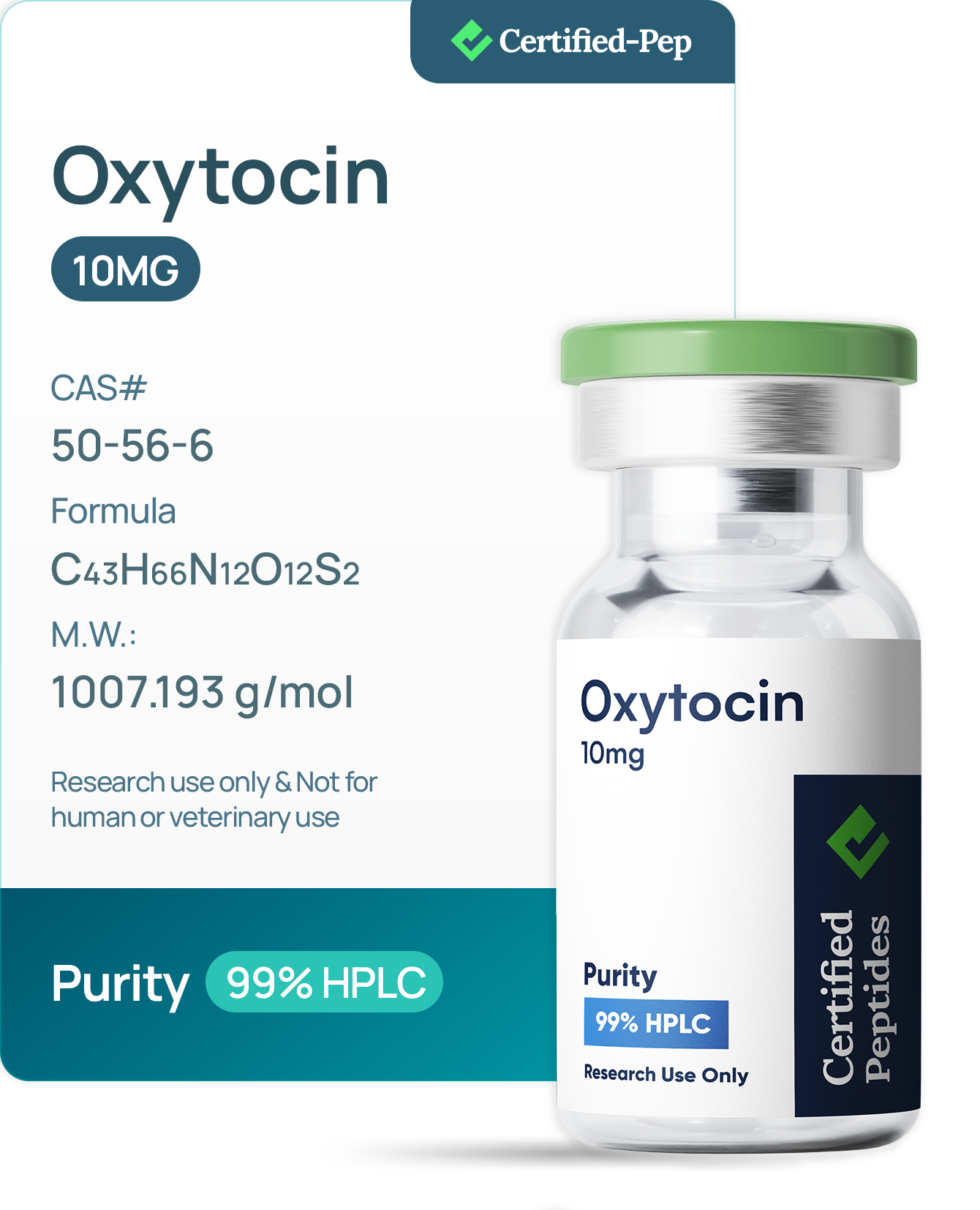


Evidence level
Phase 2 trials
A nine-amino-acid neuropeptide produced in the hypothalamus, released by the posterior pituitary, and studied for social bonding, anxiety, intimacy, and labor. Therapeutic use exists for obstetric indications; intranasal use for psychiatric and social effects has substantial but inconsistent trial data.
Mechanism
Binds central oxytocin receptors to influence social cognition and trust.
Researched benefits
Modulation of social cognition
Intranasal oxytocin has been shown in meta-analyses to modestly increase trust, in-group affiliation, and recognition of emotional facial expressions. Effect sizes are small and context-dependent — replication has been mixed.
Anxiolysis in social contexts
Several small randomized trials in social anxiety disorder and autism spectrum populations show short-term reductions in social anxiety scores. The 2015 multi-center autism trial (SOARS-B) was largely negative on primary endpoints.
Established obstetric use
Synthetic oxytocin (Pitocin) is approved for labor induction and postpartum hemorrhage control. The IV obstetric use case is mechanistically and clinically separate from intranasal psychiatric use.
Possible role in pair bonding and intimacy
Substantial preclinical data in prairie voles links oxytocin signaling to monogamous bonding behavior. Human translation is more equivocal; intranasal oxytocin has shown modest effects on partner-directed affiliative behavior in some, but not all, trials.
Risks & cautions
Variable and unpredictable effects
Oxytocin can amplify in-group bonding but also out-group hostility ('parochial altruism' effect). Some users report increased emotional sensitivity that is unpleasant rather than desirable. Effects are highly context- and personality-dependent.
Obstetric contraindications
Should not be used during pregnancy outside medical supervision. IV oxytocin during labor carries risks of uterine hyperstimulation, fetal distress, and water intoxication. Intranasal use during pregnancy is not characterized.
Hyponatremia at high doses
Oxytocin has structural and pharmacological similarity to vasopressin and can produce antidiuretic effects at high or prolonged dosing, leading to dilutional hyponatremia. Documented primarily with IV obstetric use; theoretical with chronic intranasal use.
Cardiovascular effects
Transient changes in blood pressure and heart rate are documented at higher doses. Generally mild but warrant caution in cardiovascular disease.
Dosing
10–40 IU intranasal, 30–60 minutes before a social event or therapy session. Subcutaneous use exists but is less common.
Vial sizes
5mg / 10mg
Half-life
~5 minutes intranasal
Route
intranasal, subcutaneous
Plasma half-life is ~5 minutes; central CNS effects persist longer because intranasal delivery bypasses the blood-brain barrier through the olfactory route. The 24 IU dose used in most psychiatric research traces back to early trust-game studies (Kosfeld 2005) and has become a convention more than an evidence-based optimum.
Contraindications
In depth
Oxytocin was the first peptide hormone to be sequenced and synthesized, work that earned Vincent du Vigneaud the 1955 Nobel Prize in Chemistry. It is a nonapeptide (nine amino acids) with a single disulfide bridge, produced by magnocellular neurons in the paraventricular and supraoptic nuclei of the hypothalamus and released into systemic circulation by the posterior pituitary.
Its obstetric role — uterine contraction during labor and milk ejection during breastfeeding — was established by the mid-20th century. The "social neuropeptide" framing emerged primarily from prairie vole research in the 1990s and the trust-game experiments of the mid-2000s.
Oxytocin acts through a single G-protein-coupled receptor (OXTR) that signals primarily through Gq → PLC → IP3/DAG and intracellular calcium release. Receptors are expressed:
Centrally, oxytocin modulates amygdala reactivity to social and emotional stimuli, dampening threat responses to neutral or in-group faces. It also interacts with the dopaminergic reward system in the nucleus accumbens, contributing to pair-bonding behavior in animal models.
A key methodological caveat: intranasal delivery's claim to bypass the BBB is debated. CSF oxytocin does rise after intranasal dosing, but the magnitude and time course remain controversial.
Oxytocin has more human research than most peptides in this catalog, but the literature is contested:
Foundational. The prairie vole (monogamous) vs montane vole (polygamous) comparison is a classic illustration of how OXTR distribution shapes social behavior. Knockout mice show impaired social recognition and maternal behavior.
Sometimes paired with:
Caution stacking with vasopressin analogues (desmopressin), given the structural similarity and antidiuretic crossover at high doses.
References


