About Selank
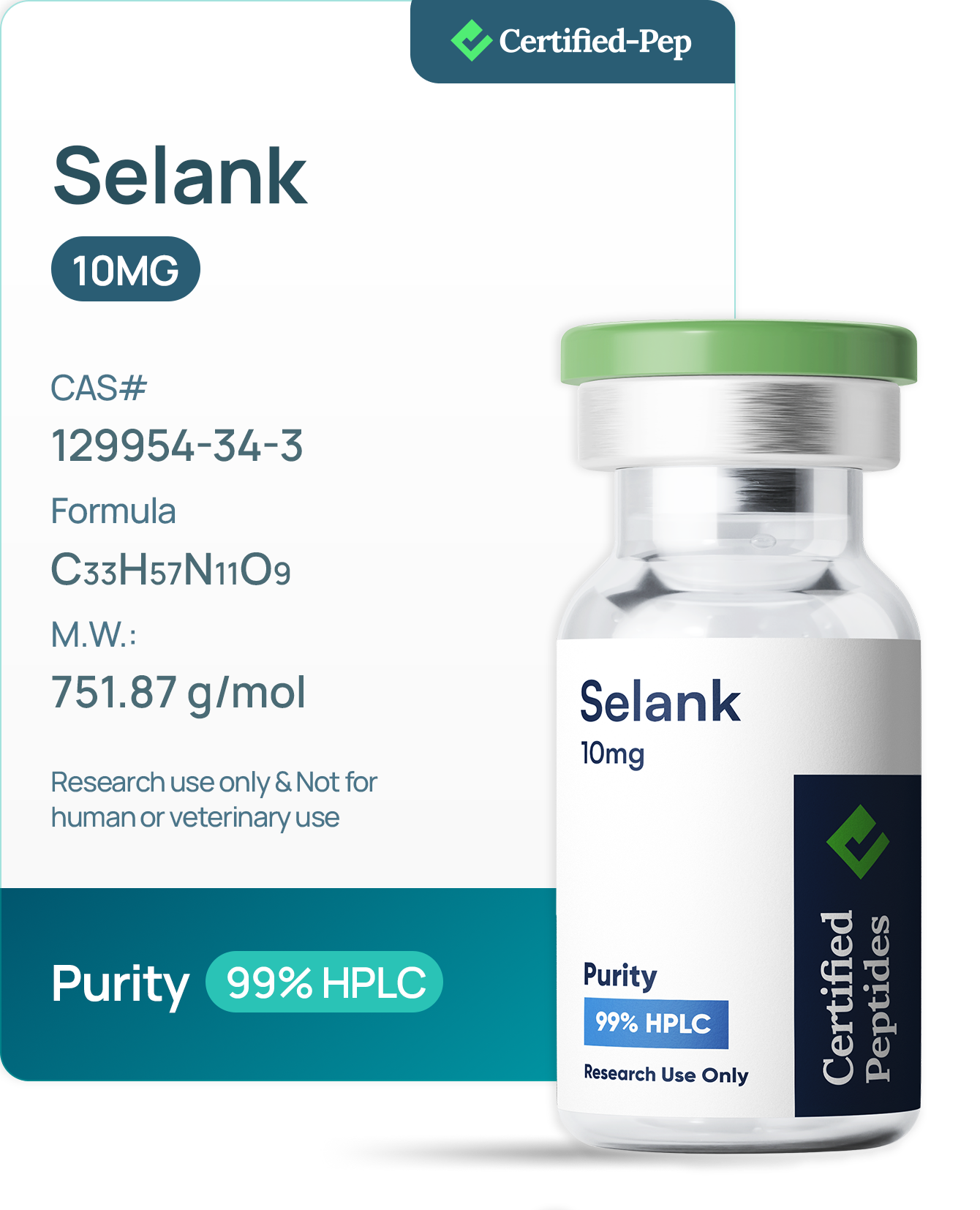
Selank is a synthetic analog of tuftsin developed in Russia for anxiolytic research. Studied for effects on BDNF, GABAergic transmission, and anxiety models. Limited Western clinical data.
Cognition
Heptapeptide Anxiolytic
A synthetic heptapeptide studied for anxiolytic and cognitive effects.
Selank is a synthetic analog of tuftsin developed in Russia for anxiolytic research. Studied for effects on BDNF, GABAergic transmission, and anxiety models. Limited Western clinical data.
Where to buy
Some links on this page are affiliate links. We may earn a commission when you purchase through them, at no extra cost to you.
 Best $/mg
 Atomik LabzTested
Selank – 10mg (Current batch tested at 12mg)
$35.00
$3.50/mg · 10mg

 Solution PeptidesTested
Selank – 10mg (Current batch tested at 12mg)
$35.00
$3.50/mg · 10mg


 BioLongevity LabsTested
N-Acetyl Selank Amidate (20mg)
$134.97
$6.75/mg · 20mg


Evidence level
Early human studies
A synthetic heptapeptide developed in Russia as an anxiolytic analog of the immune peptide tuftsin. Approved for clinical anxiety use in Russia; almost no Western trials. Reported to modulate BDNF, GABA, and enkephalin systems.
Mechanism
Modulates GABAergic tone and BDNF expression.
Researched benefits
Anxiolytic without sedation
Russian clinical studies in generalized anxiety disorder report symptom reduction comparable to medazepam (a benzodiazepine) without sedation, motor impairment, or withdrawal at study termination. Sample sizes are small and methodology limits translation.
BDNF elevation
Rodent studies report increased BDNF expression in hippocampus after intranasal Selank. This is the proposed substrate for cognitive and mood effects.
Enkephalinase inhibition
Selank inhibits the degradation of endogenous enkephalins, prolonging their action. This is part of the proposed anxiolytic mechanism and overlaps with the body's intrinsic stress-buffering system.
GABAergic modulation
Preclinical work shows changes in GABA-A subunit expression and binding after Selank exposure, possibly explaining the benzodiazepine-like anxiolytic profile without classic benzodiazepine receptor binding.
Risks & cautions
Limited Western clinical data
Nearly all published clinical work is in Russian-language journals from a small set of research groups. No regulatory review, no independent replication of efficacy claims, and limited long-term safety data.
Drug interaction unknowns
Theoretical additive effects with other GABAergic or opioid-modulating agents (benzodiazepines, gabapentinoids, opioids) have not been studied.
Pediatric use claims unverified
Russian-language sources describe pediatric anxiolytic use, but quality of evidence does not support extrapolation.
Mild local effects
Intranasal administration can produce transient nasal irritation or rhinorrhea.
Dosing
250–500 mcg intranasal, 1–3 times daily, often in 2–4 week courses.
Vial sizes
5mg
Half-life
~30 minutes
Route
intranasal
Intranasal route bypasses first-pass metabolism. Effective plasma half-life is ~30 minutes but downstream neurochemical effects last longer. Cycling (e.g., 2 weeks on, 1 week off) is common in protocol literature though not formally supported.
Contraindications
In depth
Selank (Thr-Lys-Pro-Arg-Pro-Gly-Pro) was synthesized at the V.V. Zakusov Research Institute of Pharmacology in Moscow, as part of a program to develop a stable analog of tuftsin — a tetrapeptide fragment of the IgG heavy chain with immunostimulatory activity. Selank extends tuftsin's structure with three additional residues that confer metabolic stability and shift activity toward the central nervous system.
It is registered in Russia under the brand Selank for anxiety disorders. It is not approved or reviewed in the U.S. or EU.
Selank's mechanism is multimodal and not fully established, but proposed actions include:
The cleaner anxiolytic profile (no sedation, no addiction signal in animal studies) is the most clinically interesting attribute if the Russian data translates.
Limited and methodologically constrained:
Sample sizes, blinding quality, and outcome measures vary. Treat the human evidence base as suggestive, not definitive.
More substantial than the human data. Replicated rodent findings include:
References


