About Sermorelin
Sermorelin is the first 29 amino acids of human GHRH and stimulates the pituitary to release GH in a more physiologic pulsatile pattern. Often combined with ipamorelin in research protocols for body composition and recovery.
Growth Hormone
GHRH 1-29
A 29-amino-acid GHRH analog studied for natural GH release.
Sermorelin is the first 29 amino acids of human GHRH and stimulates the pituitary to release GH in a more physiologic pulsatile pattern. Often combined with ipamorelin in research protocols for body composition and recovery.
Where to buy
Some links on this page are affiliate links. We may earn a commission when you purchase through them, at no extra cost to you.
 Best $/mg
 Atomik LabzTested
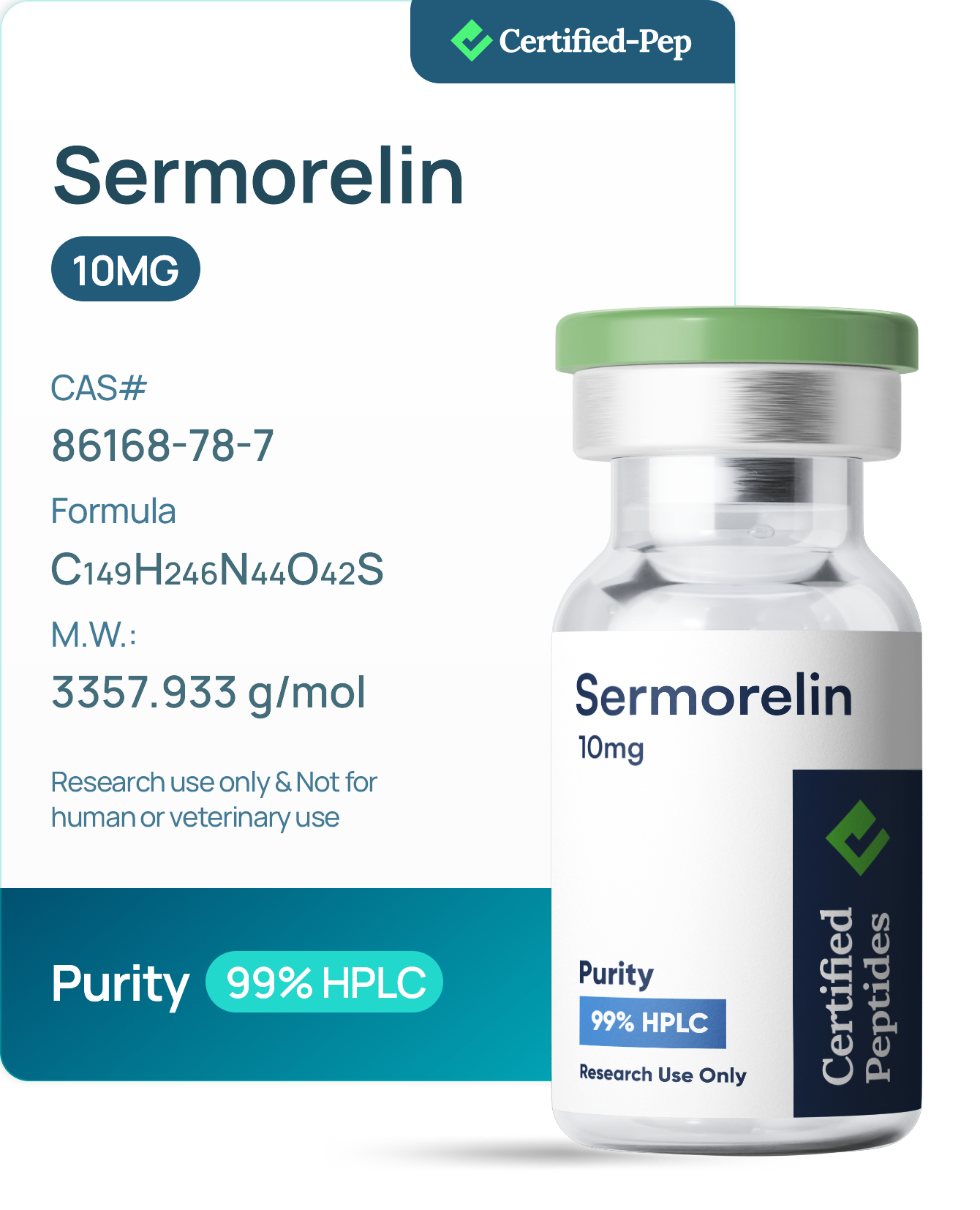
Sermorelin – 10mg (Current batch tested at 12mg)
$64.00
$6.40/mg · 10mg

 Solution PeptidesTested
Sermorelin – 10mg (Current batch tested at 12mg)
$64.00
$6.40/mg · 10mg


Evidence level
Early human studies
A 29-amino-acid GHRH analog (GHRH 1–29) that stimulates endogenous pulsatile GH release from the anterior pituitary. Historically approved for pediatric GH deficiency; now used off-label and in research contexts for adult body composition and recovery.
Mechanism
Activates the GHRH receptor on the anterior pituitary.
Researched benefits
Physiologic, pulsatile GH release
Unlike exogenous recombinant GH, sermorelin acts upstream and preserves the pituitary's natural pulsatile release pattern. This is thought to reduce the negative feedback and side-effect profile seen with rhGH.
Modest IGF-1 elevation
Daily sermorelin in adults raises IGF-1 from baseline, typically 20–40% over weeks. Magnitude is smaller and more variable than with rhGH.
Sleep quality improvements
GH pulses during deep sleep are amplified by GHRH analogs. Users frequently report deeper slow-wave sleep, which is consistent with the known relationship between GHRH and SWS.
Body composition in adults with low GH
Small adult studies in age-related GH decline show modest reductions in fat mass and increases in lean mass over 3–6 months. Effects are smaller than rhGH.
Risks & cautions
IGF-1 elevation and cancer signaling
Any GH-axis stimulant raises IGF-1, which is a growth signal for many tissues. Caution is warranted in personal or strong family history of hormone-sensitive cancers.
Pituitary tachyphylaxis
Continuous high-dose GHRH stimulation can downregulate pituitary responsiveness. Short half-life and pulsatile dosing minimize this; cycling protocols are common in practice.
Injection-site reactions
Erythema and transient irritation are common; sermorelin acetate is somewhat more reactive at the injection site than ipamorelin.
Fluid retention and arthralgia
Dose-dependent; less pronounced than with rhGH but can occur, especially in early weeks of use.
Insulin resistance at high dose
Sustained elevated GH/IGF-1 can blunt insulin sensitivity. Worth monitoring fasting glucose / HbA1c on chronic protocols.
Dosing
200–500 mcg subcutaneously once daily, immediately before sleep, on an empty stomach.
Vial sizes
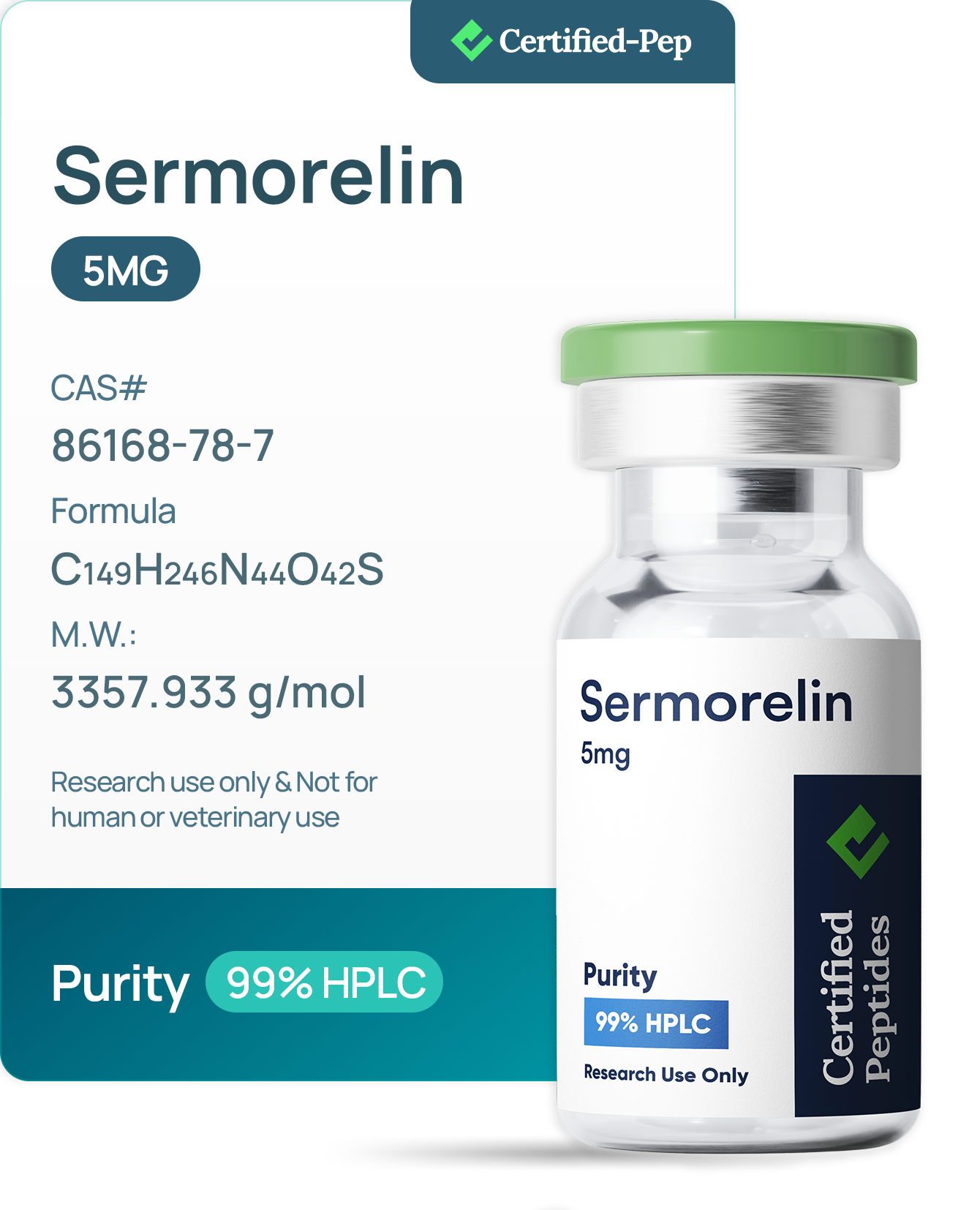
5mg / 10mg
Half-life
~10-20 minutes
Route
subcutaneous
Half-life is short (~10–20 minutes) — bedtime timing exploits the natural overnight GH pulse. Often stacked with ipamorelin for additive GH release via complementary pathways. Cycling (e.g., 5 days on / 2 off, or 8 weeks on / 4 off) is common to limit tachyphylaxis.
Contraindications
In depth
Sermorelin is the first 29 amino acids of human growth hormone–releasing hormone (GHRH 1–29 NH2), which corresponds to the active fragment of the full 44-amino-acid hormone. It was approved in 1997 (as Geref) for diagnosis and treatment of pediatric GH deficiency. The branded pediatric product was discontinued in 2008, but the molecule remains in use through compounding pharmacies and research suppliers.
The clinical reasoning behind GHRH analogs vs. recombinant GH is that stimulating the pituitary preserves negative feedback, pulsatility, and downstream regulation — the body still controls the release. This produces a smaller, more physiologic GH/IGF-1 signal with a cleaner side-effect profile.
Sermorelin binds the GHRH receptor (GHRHR) on somatotroph cells in the anterior pituitary, triggering cAMP-mediated GH synthesis and release. Key features:
The short half-life (under 30 minutes) means timing matters. Bedtime dosing aligns with the natural overnight GH pulse, amplifying it rather than replacing it.
Sermorelin has the most adult human data of any GHRH analog used in body-composition contexts:
There is no adequately powered modern adult RCT for the off-label "anti-aging" use. Most current adult use is extrapolated from pediatric data and the older adult studies above.
Extensive but less central to current discussion, since human data exists. Rodent and primate models established the dose-response and the pulsatility advantage that motivated clinical development.
Standard pairings:
Avoid combining with high-dose rhGH (redundant and additive risk) or with strong somatostatin agonists (which blunt the effect).
References


