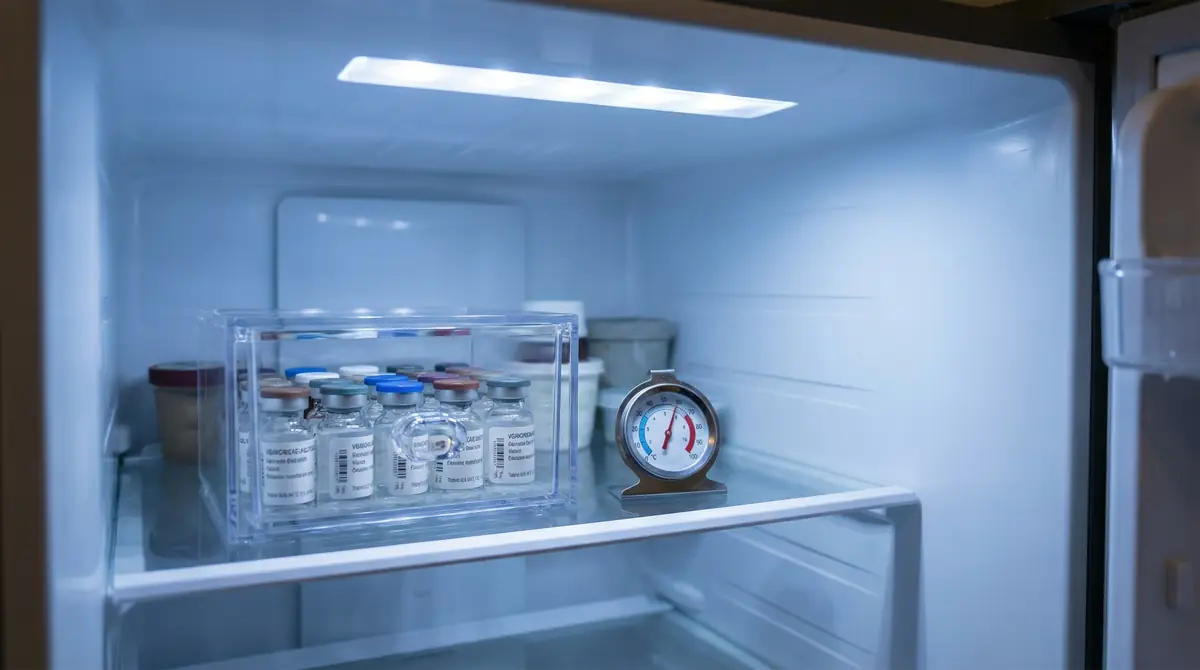
Why does peptide storage matter?
Improper storage is the most common reason peptides lose potency before their expected expiration date. Peptides are fragile biological molecules that degrade when exposed to heat, light, moisture, or bacterial contamination (1).
Understanding the difference between storing lyophilized (freeze-dried) peptides and reconstituted (dissolved in liquid) peptides is essential. Each form has different stability characteristics and storage requirements.
Storing lyophilized (freeze-dried) peptides
Lyophilized peptides are the most stable form and can be stored for extended periods when kept cool and dry. The freeze-drying process removes virtually all moisture, which is the primary driver of peptide degradation.
Storage guidelines for lyophilized peptides
| Storage condition | Expected stability |
|---|---|
| Room temperature (20-25C), sealed | 1-3 months |
| Refrigerated (2-8C), sealed | 6-12 months |
| Frozen (-20C), sealed | 12-24+ months |
Key rules for lyophilized storage
- Keep the vial sealed until ready to reconstitute. The rubber stopper and crimp cap protect against moisture intrusion.
- Avoid temperature fluctuations. Do not repeatedly move peptides between freezer and room temperature. Each temperature cycle introduces moisture through condensation.
- Protect from light. Store in the original packaging or wrap vials in aluminum foil.
- Keep dry. Moisture is the enemy of lyophilized peptides. If you notice the powder has changed color or become sticky, it may have absorbed moisture and degraded.
Storing reconstituted peptides
Once a peptide is dissolved in bacteriostatic water, it must be refrigerated at 2-8C and used within 3-4 weeks. The liquid environment makes the peptide far more susceptible to degradation and bacterial growth (2).
Reconstituted storage rules
- Always refrigerate immediately after reconstitution
- Never freeze reconstituted peptides unless dividing into single-use aliquots
- Keep the vial upright to minimize surface area exposure
- Use bacteriostatic water rather than sterile water for multi-dose vials, as the benzyl alcohol preservative inhibits bacterial growth
- Swab the stopper with alcohol before every needle insertion to maintain sterility
- Discard after 28-30 days even if peptide remains in the vial
Signs of degradation
Discard reconstituted peptides immediately if you observe:
- Cloudiness or particulate matter in the solution
- Color change (should be clear and colorless)
- Unusual odor
- Visible contamination
Key takeaways
- Lyophilized peptides are stable for months at room temperature and over a year when frozen
- Reconstituted peptides require refrigeration and have a 3-4 week shelf life
- Protect all peptides from light and moisture to prevent degradation
- Avoid freeze-thaw cycles for both forms
- Bacteriostatic water extends usable life compared to sterile water
- When in doubt, discard any peptide showing signs of degradation